
Agricultural waste transformed into biomaterials, mould-grown mycelium, bio-based polymers derived from orange peels, wood-free paper, AI-powered platforms for real-time carbon footprint monitoring and tailored ESG consulting for SMEs: at the Discovery Zone of Packaging Première Milan 2026 – the area dedicated to start-ups – the future of packaging took centre stage, presented by the people building it. The innovative start-ups that chose this platform were not there to showcase finished products, but to open a dialogue with an industry that first needs to understand the right questions before it can find the right answers. The result was a broad overview of bio-based materials and ESG measurement tools, united by a common thread: sustainability as a methodology rather than simply an outcome.
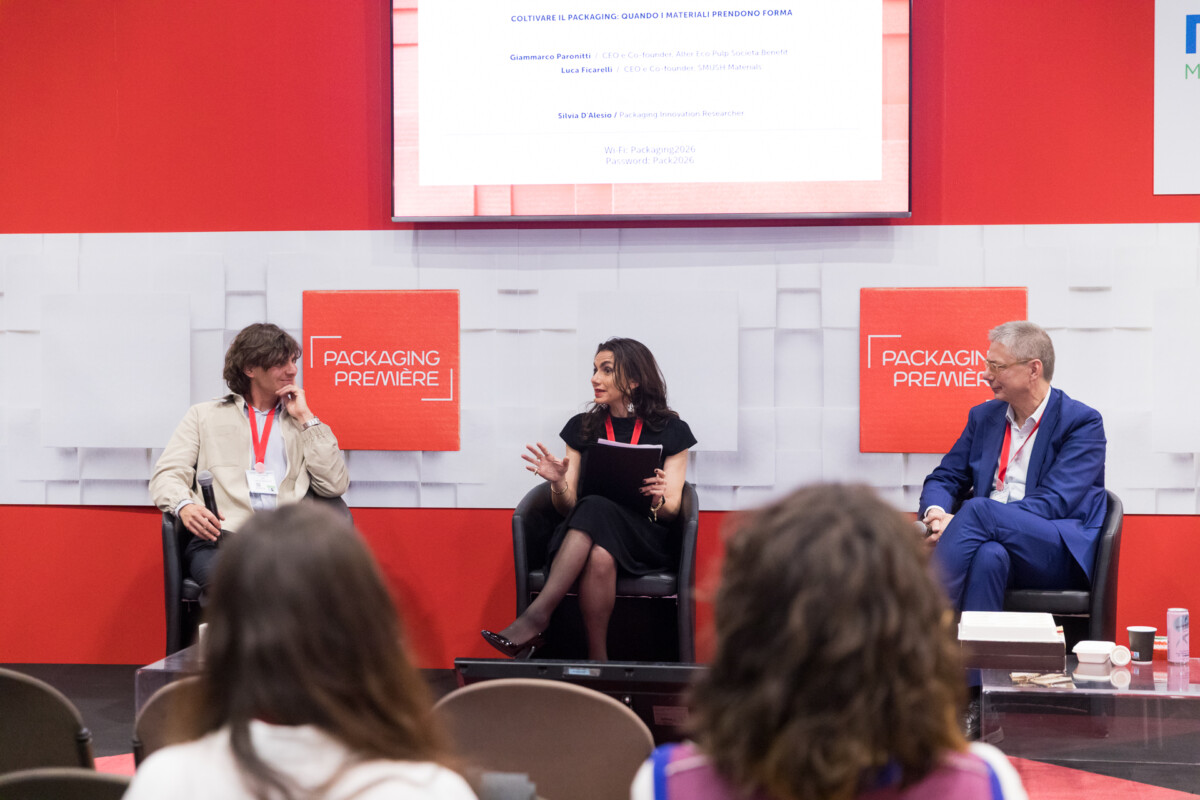
Two different technologies, one shared goal: replacing single-use plastics in packaging with high-performance organic materials. Alter Eco Pulp focuses on cellulose fibre moulding – a thermoforming process that transforms fibres from annual plants, such as bamboo, sugarcane and wheat straw, into rigid, plastic-free packaging with built-in water and grease barriers. Oxygen barrier performance remains a work in progress and is currently achieved through bioplastic laminations that are compatible with the product’s compostability. Smush Materials addresses a different challenge: protective and void-fill packaging, a segment traditionally dominated by polystyrene and expanded polyethylene. Its technology is based on mycelium – fungi grown on agricultural by-products such as rice husks – which acts as a natural binding agent without the need for chemical additives. The result is a 100% compostable material whose mechanical properties can be tailored by adjusting fibre length. It decomposes in around 40 days at the end of its life cycle while remaining stable on the shelf for decades. The key message shared by both speakers was that sustainability is an added value, not the product itself. What they offer is performance and cost competitiveness with plastic alternatives, particularly in applications where viable sustainable solutions have so far been unavailable.
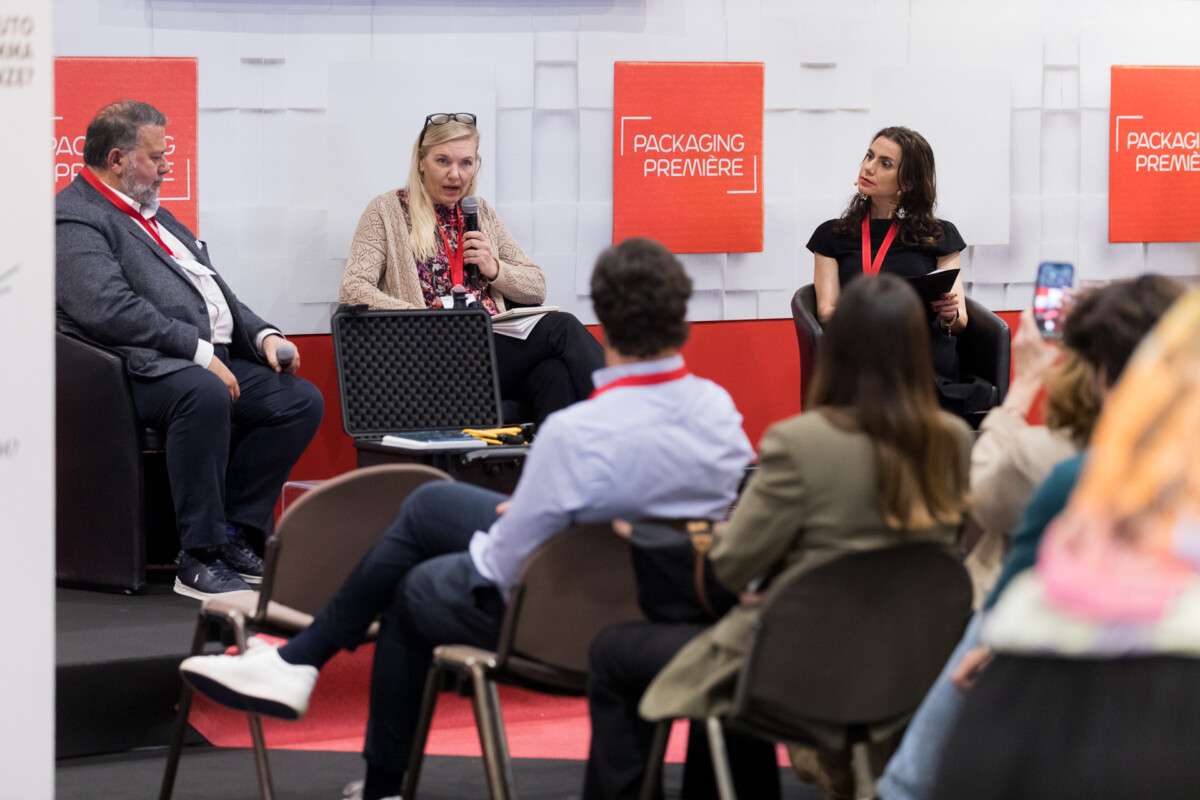
The central question of the talk was both simple and challenging: what is the value of ESG data if companies do not know how to use it? Giovanni Fracasso, CEO and Founder of Overlab, introduced Greenverse, a platform that uses sensors installed in manufacturing facilities to calculate the carbon footprint of each production batch in real time while semi-automatically generating decarbonisation strategies. His argument was that reducing a product’s carbon footprint does not necessarily increase costs – it can actually generate savings. In his view, the most defensible competitive advantage lies not in raw materials, which are available to everyone, but in the manufacturing process itself. Ania Puntari, Founder and Managing Partner of Liito, offered a complementary perspective. Before collecting data, companies first need to determine which data truly matter. Sustainability affects every business function – from legal and procurement to human resources – and cannot be delegated to a single Sustainability Manager. Businesses are still unfamiliar with metrics such as tonnes of CO₂, she noted, making time and guidance essential to transform data into informed decisions. The discussion also highlighted an important market trend. Intesa Sanpaolo has announced that 30% of its future €112 billion lending portfolio will be reserved for ESG-certified companies. As Fracasso concluded, businesses that remain outside the measurement framework risk being excluded from access to credit as well.
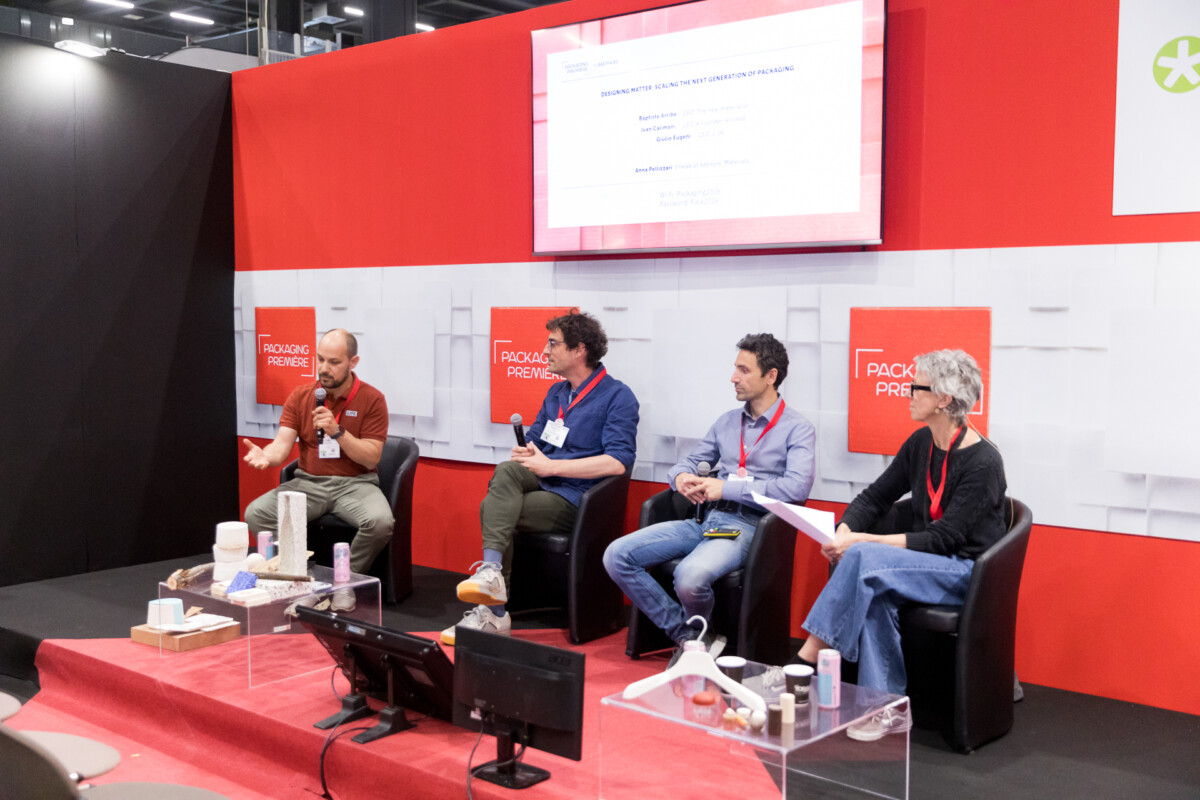
Three start-ups, three different approaches to the same challenge: developing bio-based materials that are aesthetically compelling, technically high-performing and scalable for industrial production. Krillmat transforms agri-food waste – including citrus peels, hazelnut shells, coffee grounds and grape pomace – into bio-based polymers that can be injection-moulded using conventional plastic manufacturing processes. This enables industrial scalability without requiring manufacturers to redesign existing production lines. The New Materialist begins with the brand brief and identifies the biomaterial best suited to its needs, building a process in which aesthetics are not merely decorative but a prerequisite for adoption. A material that creates a strong visual impact generates the internal commitment needed to carry a project through the challenges of scaling up. L-ife uses Ganoderma mycelium to grow protective packaging directly inside a mould within a week, creating a compostable material with a negative carbon footprint when biogenic carbon is taken into account. Despite their different technologies, all three companies face the same end-of-life challenge. Krillmat focuses on recyclability within existing plastic recycling streams – a solution that is technically feasible but not yet fully supported by infrastructure. The New Materialist works to ensure compliance with the Packaging and Packaging Waste Regulation (PPWR) for paper-based materials, while L-ife’s solution is certified compostable. All three acknowledged that, in its current form, the PPWR places innovative biomaterials at a disadvantage compared with conventional recycled plastics, highlighting a regulatory tension that remains unresolved.
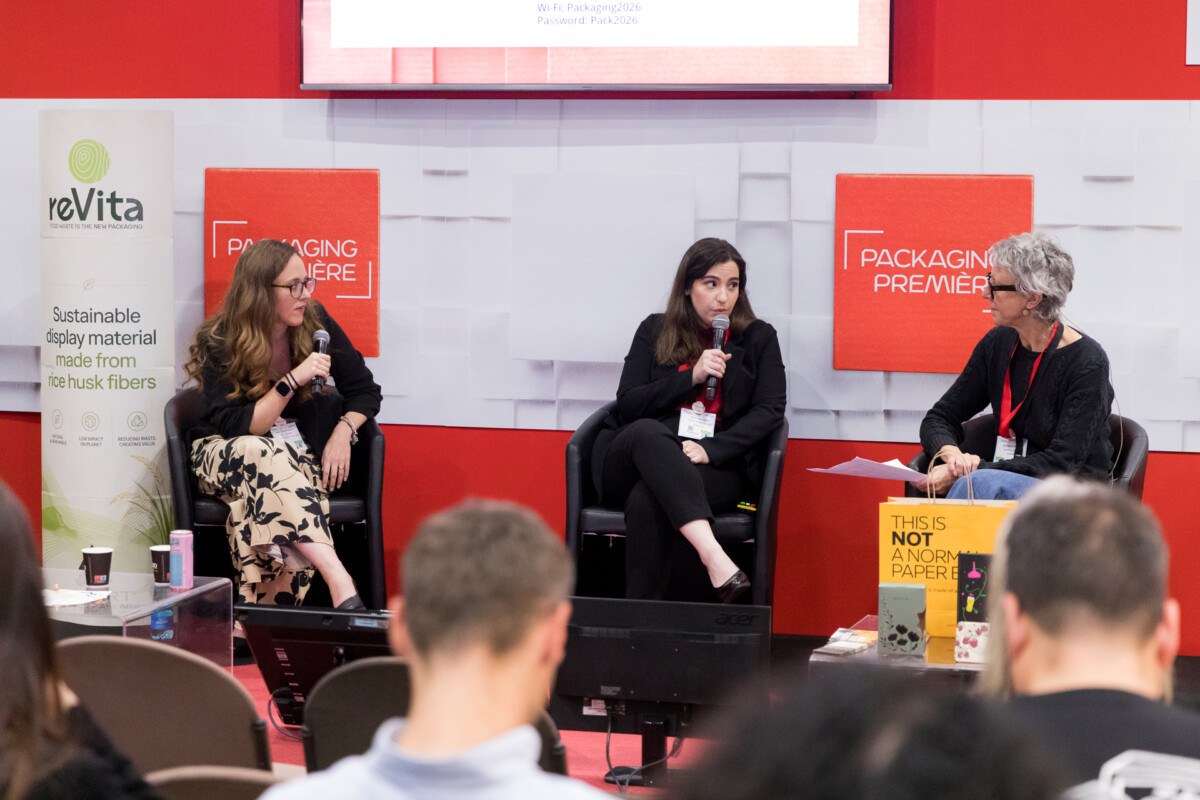
While the other talks explored alternatives to plastic, this session shifted the focus to a material that is already widely regarded as sustainable by default: paper. Both Paperwise and ReVita produce paper and paperboard from agricultural waste and agro-industrial by-products – including corn, sugarcane, rice, bran and brewing residues – instead of wood. Matilde Mendonça, ESG & Growth Manager at Paperwise, presented Life Cycle Assessment (LCA) data showing that the company’s products have an environmental impact almost 50% lower than virgin wood-based paper and 29% lower than recycled paper. She also highlighted the company’s local sourcing model, with raw materials traceable within a 50-kilometre radius of its production facilities. Greta Colombo Dugoni, CEO and Co-founder of ReVita, reported reductions of up to 95% in energy and water consumption and up to 70% in CO₂ emissions thanks to a proprietary process that integrates agricultural fibres directly into existing paper mills, eliminating the need for new production lines. The two companies differ in their pricing strategies. ReVita deliberately does not rely exclusively on agricultural fibres in order to remain price competitive. Paperwise, by contrast, maintains a composition made entirely from agricultural waste, accepting a 5–10% price premium over conventional paper rather than compromising on material content. Both companies confirmed that their products are fully recyclable – up to seven recycling cycles, in line with conventional wood-based paper – and fully compliant with the Packaging and Packaging Waste Regulation (PPWR), requiring no changes when the regulation comes into force.
Lorem ipsum dolor sit amet, consectetur adipiscing elit Lorem ipsum dolor sit amet, consectetur adipiscing elit


