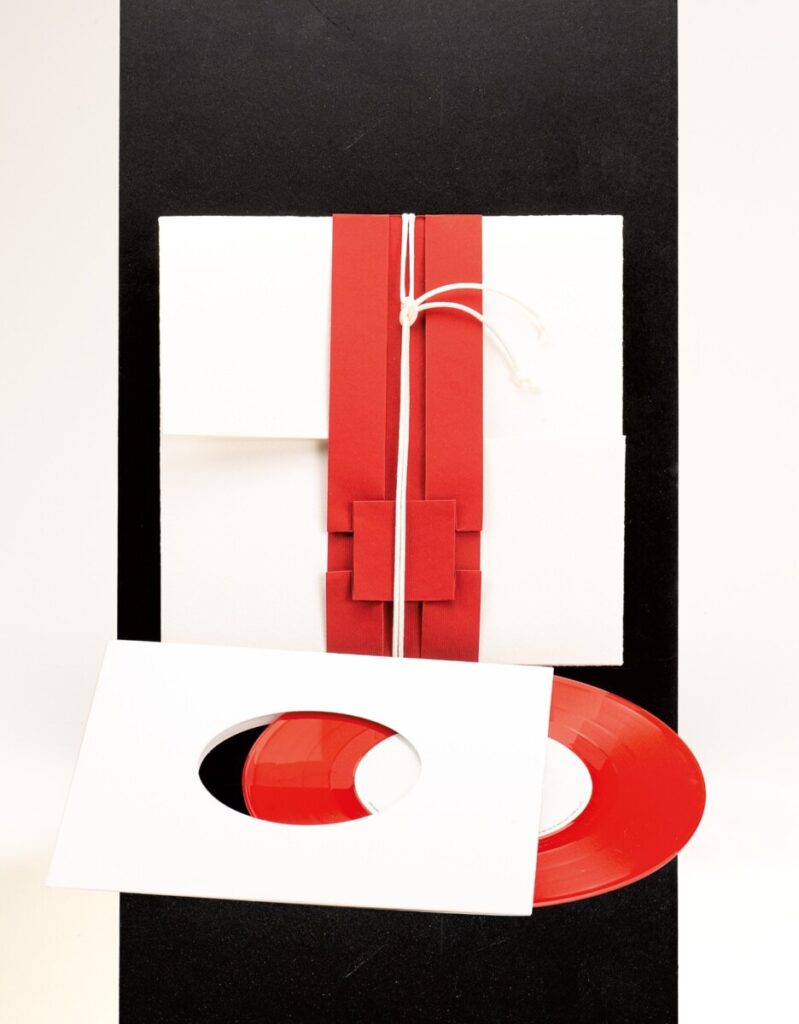
The project begins with Fedrigoni’s Tintoretto Neve 250 gsm paper.
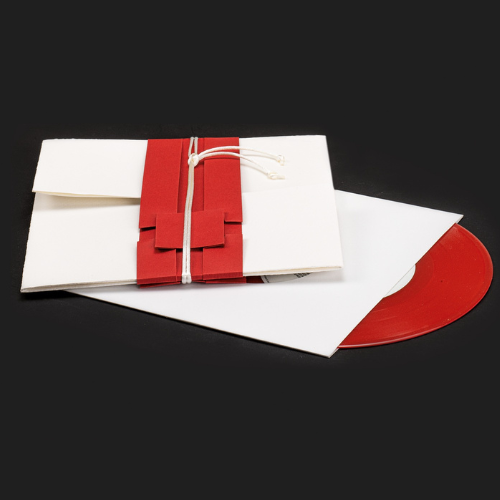
Luxoro’s technologies and foil, together with Kurz’s contribution, elevate the material, which is printed by Eurographic and finally folded by Bonuccelli, bringing craftsmanship and technical excellence together. Elisabetta Bonuccelli will also craft the Japanese culture-inspired obi using Fedrigoni’s Nettuno Rosso Fuoco 140 gsm paper. The obi, just like the sash of a kimono, will wrap and seal the packaging. The obijime, the cord tied around the obi to hold it firmly in place, completes both the aesthetics and the functionality of the packaging, thanks to a paper ribbon crafted by Furlanis.
Paper Tracks is designed to be discovered slowly, layer by layer, until reaching its heart, a container that is also content: the vinyl record with two tracks by Ocrasunset, who has already collaborated with Packaging Première during the past three editions.
Simone Boffa, known as Ocrasunset, began his career as street musician, entering the music world during the golden age of recording studios: long recording sessions with guitars and live samplers and, above all, constant collaboration and exchange with fellow professionals.
He describes this period as an artisanal apprenticeship, during which he learned the craft observing closely techniques, sensibilities and secrets.
The decline of recording studios in the early 2000s, along with the growing spread of sound libraries and software for automatic arrangements that tend to homogenize productions, pushed him toward electronic music, which he initially saw as a way to create arrangements and deliver a fully finished product. Craftsmanship shifted into studio production, with new tools, new instruments, and original samples: a process of reconstruction and evolution.
Then the electronic music. Today, his artistic research integrates sounds and visuals, using software that allows him to shape music and image in parallel: once again, an artisan’s craft, but in digital form. It is within this artistic approach that the tracks created for Packaging Première Milan take shape: through his dialogue with Bonuccelli and the reference to Josef Albers’s work, the theme of the square emerges as both a visual and conceptual matrix.
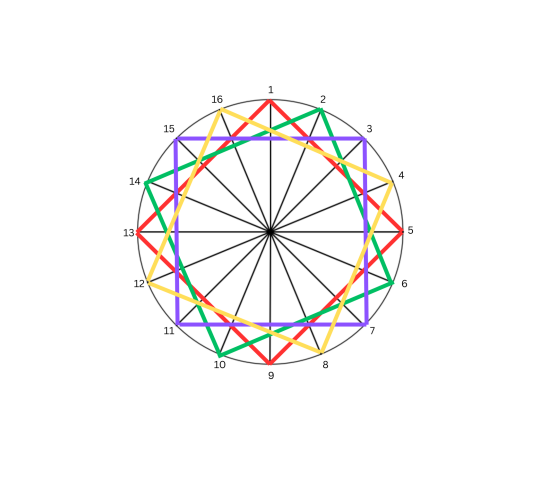
But how does one translate a square into music? The answer lies in the step sequencer: a tool that divides a musical measure into a series of 12 or 16 steps, each of which can be activated to trigger a sound when the sequence reaches that point.