The Art Gallery design space will be titled Folded Realities, inspired by the work of Elisabetta Bonuccelli. The theme of folds, understood as traces, runs throughout the entire event, reflecting the idea of leaving a mark, not only a graphic one.
The exhibition project will unfold across three rooms, each defined by a dominant color: white, red, and black. A total of nine artists will be selected, and each artist will be required to create a triptych, consisting of one work for each room/color.
Each artist is required to submit one artwork in white, one in red, and one in black.
The three artworks:
- Must be a coherent whole, conceived as parts of a single project;
- Must also stand individually within the monochromatic room in which they will be exhibited;
- Do not necessarily have to be the same image rendered in three different colors; instead, three distinct works, specifically conceived for each color, are encouraged, as long as they maintain conceptual and formal continuity.
Each color is not merely a chromatic choice, but represents a distinct environment, emotional atmosphere, and visual tension. For this reason, each work within the triptych must also be inspired by a specific musical track, different for each color. The tracks should not be “illustrated”, but rather used as an emotional, rhythmic, or conceptual stimulus in the development of the artwork.
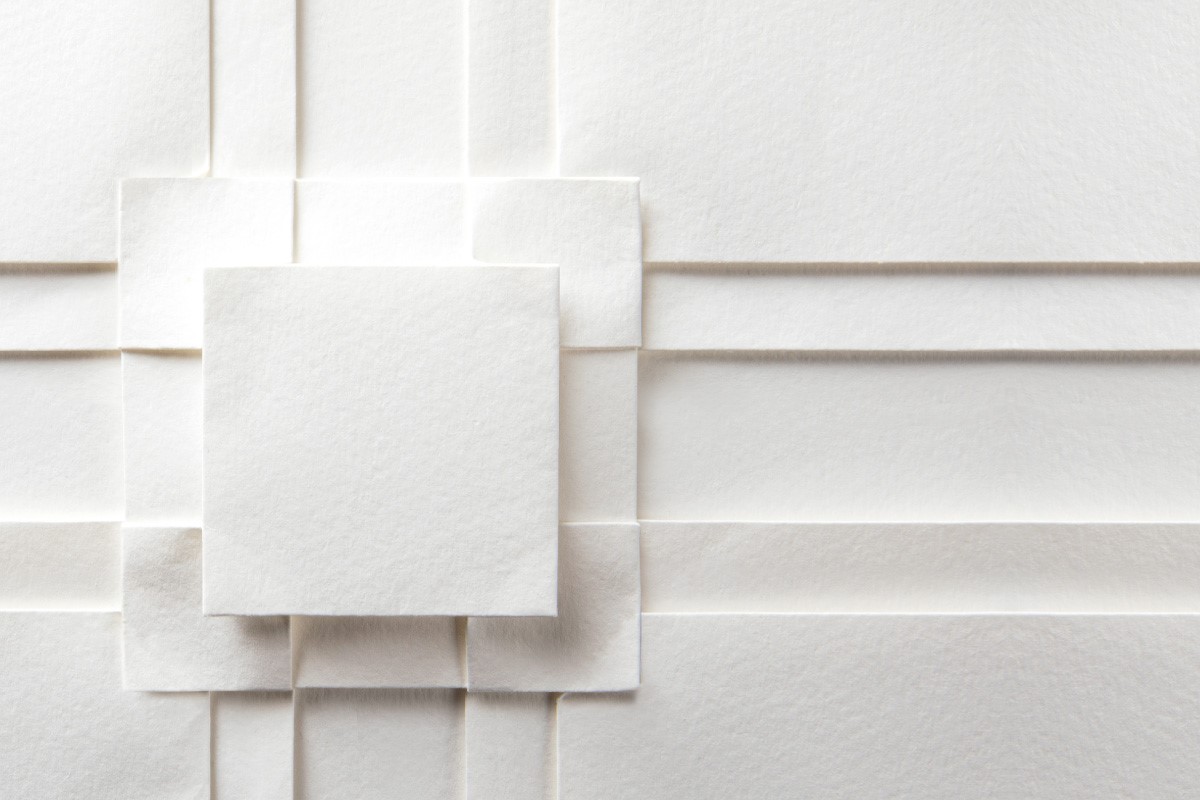
The curatorial theme proposes a return to craftmanship as an active design value, where form, color, and sound engage in a synesthetic dialogue. Polygons, networks, grids, and modular patterns function as rhythmic structures, while ripples, crests, and discontinuities generate visual variations comparable to sonic modulations.
On a flat surface, volumes and illusions of three-dimensionality emerge through layers, textures, and relief mappings, enhanced by the interplay of light and shadow, which operates as a musical dynamic.
Color – red, white, and black – is not merely decorative, but acts as a temporal and expressive dimension. Hybrid processes, spanning from analog to digital, make it possible to simulate folds, materials, and otherwise impossible deformations, while maintaining a printable outcome that preserves a strong sense of materiality. In this way, the transformation of the sheet into form and of the fold into sculpture becomes a visual score, in which hand, gesture, and matter intertwine with musical rhythm, giving rise to a visual plasticity shaped by curves, twists, and thicknesses that render tangible the interaction between geometry, relief, color, and sound.