

Luxury packaging for luxury goods, a marker of brand identity and perceived value, is undergoing a transformation that is reshaping the entire industrial landscape. In Italy, the packaging market reached €38 billion in 2024, with growth of 1.3% forecast for 2025. Within this sector, the luxury packaging segment is valued at €1.3 billion and represents roughly 364,000 tonnes of materials, amounting to around 2.5% of total volume, yet with a much higher economic weight compared to its physical volume.
Paper and cardboard lead the field, accounting for 39% of total quantity and 48% of revenue, followed by plastic (22%), glass (11%), wood (8%) and metal (5%). This is a high value-added sector, closely connected to the worlds of cosmetics, fashion and premium beverages, where packaging serves not merely as a container but as a medium for storytelling, emotion and brand recognition.
Yet within this landscape of excellence, a new challenge is taking shape: balancing aesthetics with sustainability, and craftsmanship with regulatory compliance. The European Packaging and Packaging Waste Regulation (PPWR) stipulates that by 2030 all packaging placed on the European market must be either reusable or recyclable. For the luxury sector, traditionally reliant on refined materials and intricate constructions, this represents a profound shift in mindset.
It is in this context that the Italian Packaging Institute, through its Luxury Packaging Commission, which brings together more than forty companies spanning the entire supply chain, has developed its Guidelines for Environmental Management in the Luxury Packaging Supply Chain. This strategic document is designed to support businesses in their transition towards sustainability, turning complex regulatory requirements into practical, accessible tools.
The guidelines were written with three main aims in mind:
One of the document’s distinguishing features is its inclusion of illustrative case studies, created to offer concrete examples of the technical and design recommendations in practice. By presenting examples of packaging redesign using materials such as paper, glass and aluminium, it demonstrates the measurable environmental benefits – from CO₂ reductions to process optimisation and improved recyclability – that can be achieved by applying the principles set out in the guidelines.
The project is founded on the concept of “When packaging generates value”, an approach that encourages companies to view sustainability not as a constraint but as an extension of the brand’s own value. Luxury can, in fact, serve as a laboratory for innovation across the entire packaging sector: the cosmetics industry is already showing the way with refill systems and the growing adoption of high-quality recycled materials.
Market forecasts confirm that this trajectory is a winning one: globally, luxury packaging is expected to grow by between 3.8% and 5.2% per year until 2032, driven precisely by its capacity to unite design, technology and environmental responsibility.
With this initiative, the Italian Packaging Institute reinforces its role as a bridge between industry and institutions, promoting a collaborative model that brings together brands, suppliers and end-of-life operators. Sustainability is no longer an added extra but the new competitive standard for high-end, Italian-made products.
In the luxury sector of tomorrow, packaging will remain the product’s first calling card – but it will also stand as tangible proof of a commitment to a more conscientious future.
Written by
Alessandra Alessi
Communication Manager, Istituto Italiano Imballaggio
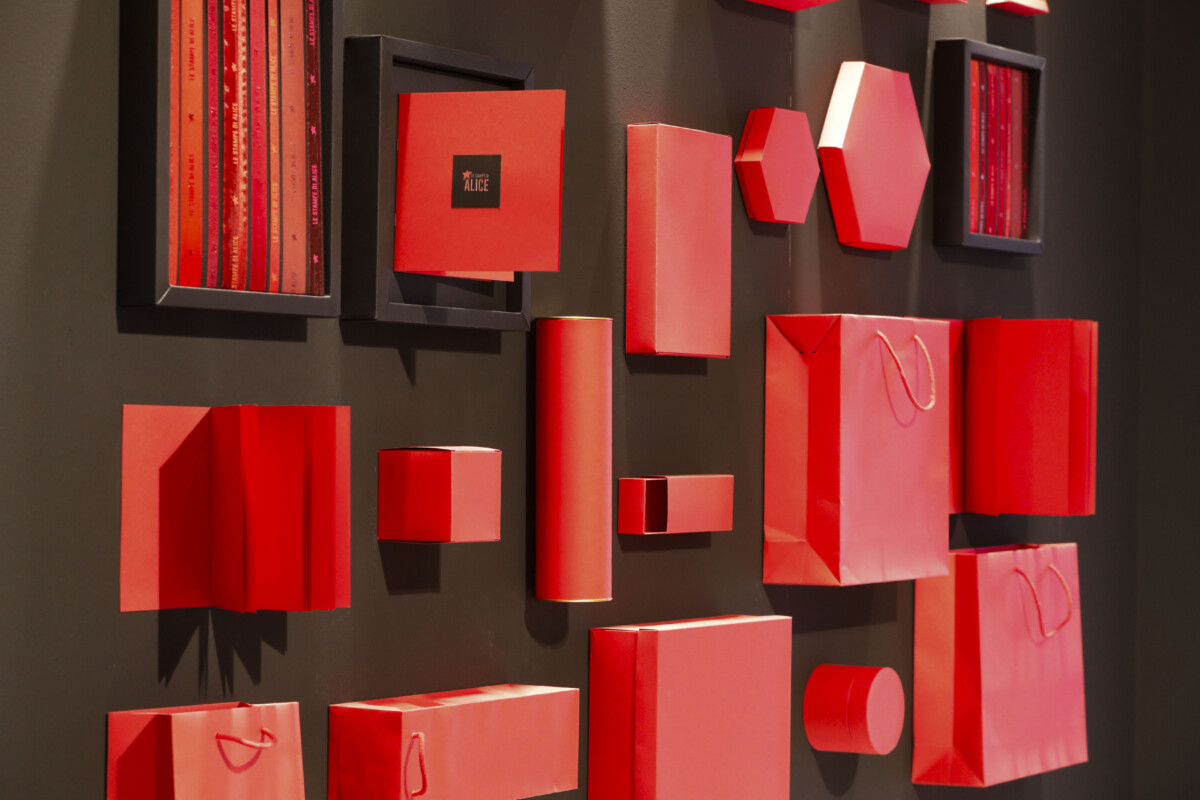
Source: Selfridges
Lorem ipsum dolor sit amet, consectetur adipiscing elit Lorem ipsum dolor sit amet, consectetur adipiscing elit


